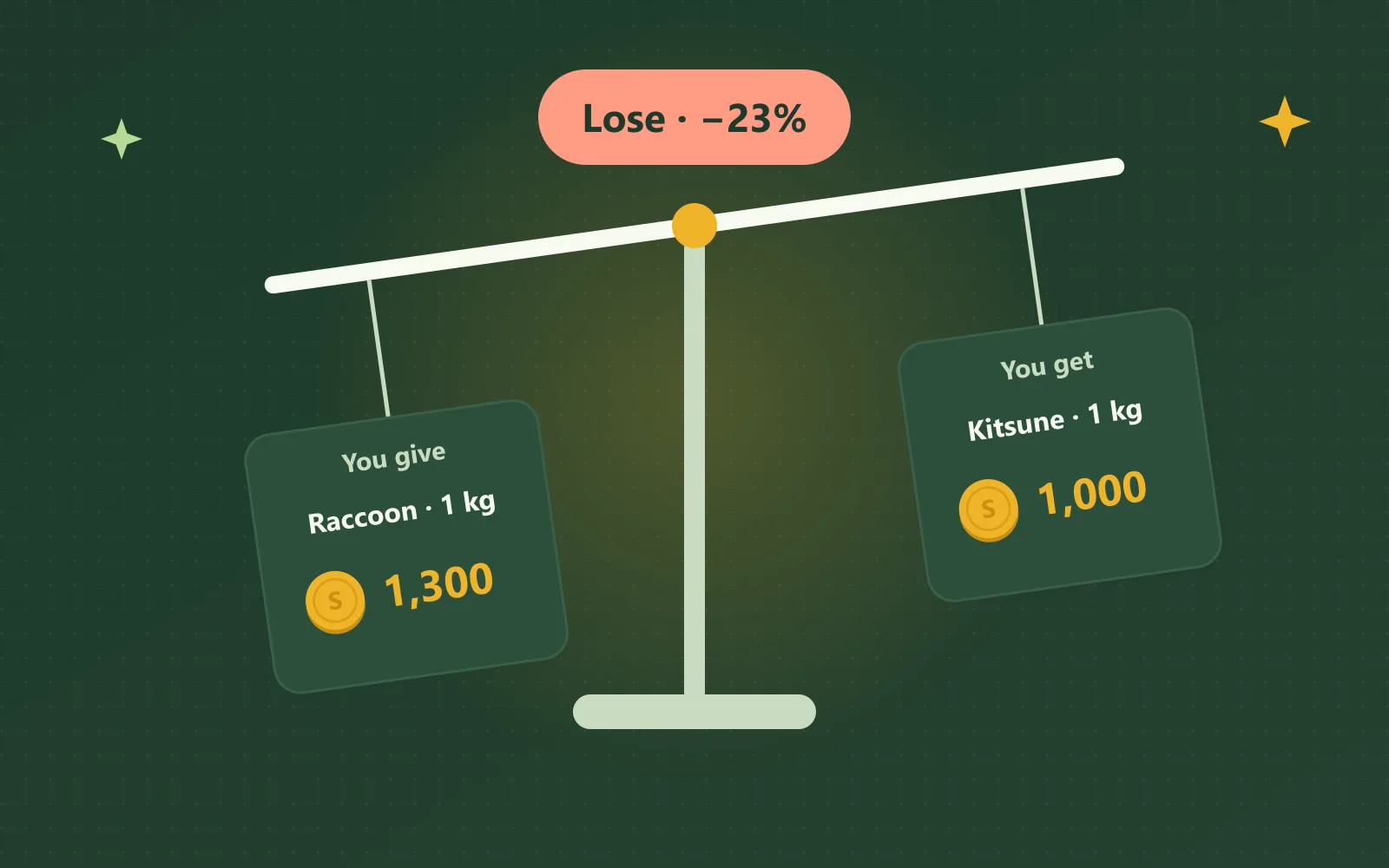
These Grow a Garden values show the estimated worth of each pet in Trade Tokens, the currency players spend in the Trade World. Enter the pets on both sides of an exchange, and the calculator immediately tells you whether it is a Win, Fair or Lose.
Every Grow a Garden pet value
This GAG pet value list gives the estimated trade value of 317 pets, sorted from the most valuable to the least valuable. Each value applies to a pet with a base weight of 1 kg, meaning its weight at age 1.
The list also displays each pet's value at its heaviest recorded weight. You can search by name, filter by version or reliability label, and add any pet directly to your trade.
Every value carries a label that explains how reliable the number is.
- Verified means two independent value lists give a 1 kg price within 25% of each other.
- One source means only one list currently provides a value for the pet.
- Sources differ means the two lists disagree, and you see both figures side by side.
about 1,300
tokens
about 50,000
tokens
For example, a Raccoon with a 1 kg base weight is valued at about 1,300 tokens. One with a 10 kg base weight reaches approximately 50,000. Another 65 pets have no reliable trade data yet, so we display their names without inventing a figure.
Rather than filling these gaps with an identical figure for every rarity, we deliberately leave them blank. A missing value is more honest than an invented estimate when expensive pets are involved.
Is my trade a Win, Fair or Lose?
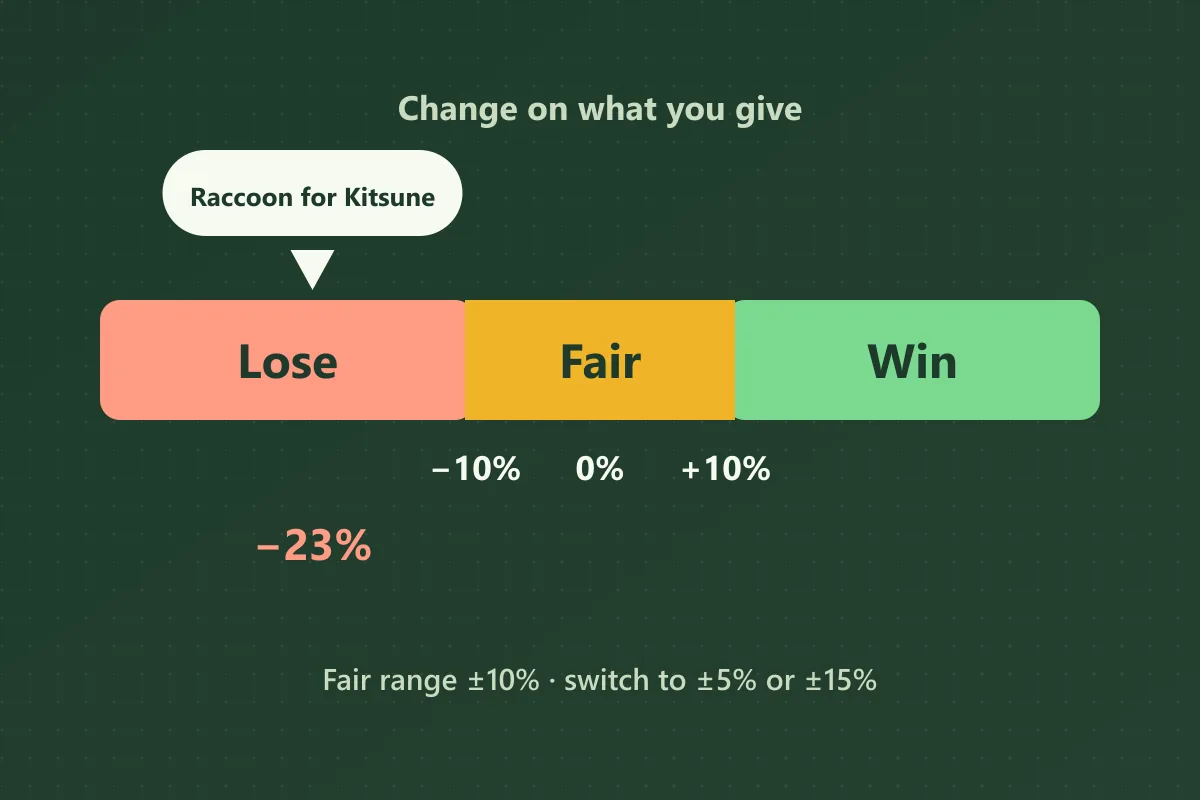
Your trade is a Win when you receive over 10% extra value and a Lose when you receive over 10% less. Anything inside that range counts as Fair, calculated from the combined value of each side.
- Type each pet you are offering under You give, then select it from the list.
- Enter the exact weight and age that the game displays for the selected pet.
- Add the pets you are receiving under You get, using the same method.
- Use Add tokens for a pet without a listed value, or for an extra token payment.
- Review the verdict, the difference and the percentage underneath the totals.
- −(1,000 − 1,300) ÷ 1,300 = −23%
- =You would receive about 23% less value than you give.
Experienced traders use different fair ranges, so this GAG trade calculator lets you switch between 5%, 10% and 15%. A tighter range suits valuable pets, because even a small percentage can equal thousands of tokens.
What does WFL stand for?
- WFL
- WFL stands for Win, Fair or Lose, and some players say Loss instead of Lose. It is community slang for evaluating an exchange, so the game itself never displays a WFL verdict.
- Overpay
- An overpay is additional value that one player adds to a trade. Players regularly overpay for popular or limited pets, so a small Lose can still make sense for a pet you particularly want.
How are pets valued?
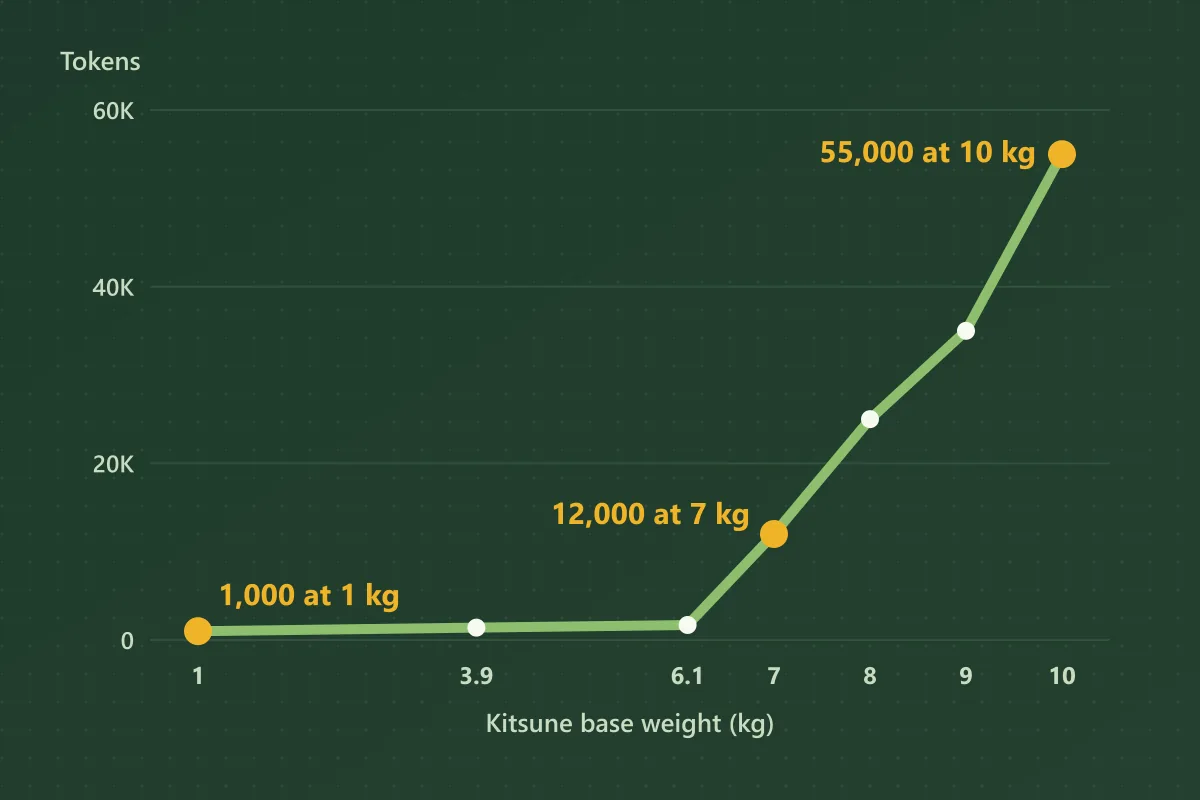
Each pet value comes from community trade data, recorded at up to nine fixed weights from 1 kg to 11.4 kg. The calculator draws a straight line between the two nearest weights to estimate any value in between.
These recorded prices come from completed trades and offers reviewed by experienced traders. They reflect what players actually pay, so popular pets frequently cost more than their rarity suggests.
- Some pets have fewer recorded weights. Above the heaviest recorded weight, the calculator treats the last value as a minimum and labels the total "At least".
- A few curves dip, meaning a heavier pet is listed lower than a lighter one. For example, a Peacock is valued at 700 tokens at 7 kg but only 309 at 8 kg. The list flags these unusual dips, so you can approach that weight range carefully.
- These values also ignore RAP, the recent average price recorded for completed sales. RAP treats every copy of a pet identically, regardless of its weight or age.
Why does base weight change the value?
Base weight determines the value because it decides how heavy a pet can eventually grow. The game displays current weight, so the calculator converts it to base weight using the age you enter.
For example, a pet showing 11 kg at age 100 has a base weight of only 1.1 kg.
| Base weight | Tokens |
|---|---|
| 1 kg | about 1,000 |
| 7 kg | about 12,000 |
| 10 kg | about 55,000 |
Heavy pets are considerably rarer, so value climbs slowly at first and then extremely quickly. A Kitsune is worth about 1,000 tokens at 1 kg, 12,000 at 7 kg and 55,000 at 10 kg.
To find the base weight before you trade, use our pet weight calculator.
Pet ability calculatorThe pet ability calculator also links here with the base weight already filled in.
Do Rainbow and Giant versions have their own value?
Yes, Rainbow and Giant pets have their own value, listed as separate entries. The list holds 52 Rainbow and 11 Giant pets, along with Festive, Ghostly and Gilded Chocolate versions.
5 tokens
Standard version
15,000 tokens
Separate entry
There is no consistent multiplier between a standard pet and its special versions. At 1 kg, a Giant Barn Owl is valued at 15,000 tokens, while a standard Barn Owl is only 5.
In contrast, a Rainbow Mizuchi is worth only about four times a standard one. Because the gap changes so much from pet to pet, the calculator never applies a general multiplier.
If a version has no listed value, add its price as tokens instead of guessing from the standard pet. Crop mutations follow fixed rules, and our mutation calculator covers those separately.
What are Trade Tokens?
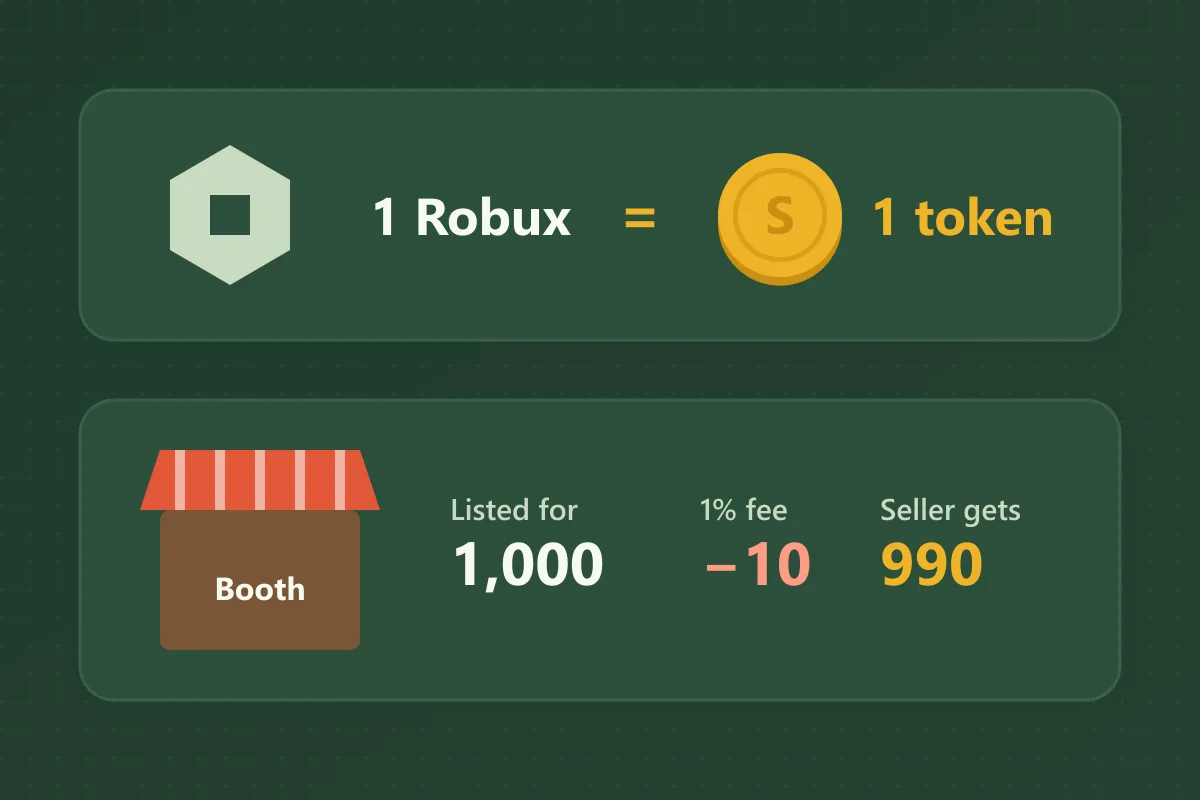
Trade Tokens are the currency players use to buy and sell items in the Trade World, a separate trading hub added on 29 November 2025. Every value on this page appears in tokens, so you can compare different pets consistently.
You buy tokens with Robux at a fixed rate of 1 Robux for 1 token. You can also earn them by selling pets or plants to other players from your personal booth.
- 1For example, a pet is listed for 1,000 tokens.
- =The sale returns 990 tokens to the seller.
Because 1 token costs 1 Robux, token values also give a rough Robux price for buying each pet. That makes tokens the most practical common measure for evaluating offers in any trade.
Can you trade Sheckles?
Yes, you can add Sheckles to a regular trade, but the Trade World only accepts tokens. Regular player trades require a Trading Ticket, which costs 100,000 Sheckles or 19 Robux from the Gear Shop.
A temporary 10% fee on traded Sheckles was officially removed in September 2025.
Seeds still cannot be traded, while pets and harvested fruits can.
There is no official exchange rate between Sheckles and tokens, so treat any quoted ratio as an approximate estimate. When a player offers Sheckles, agree on the token value of the pet first.
Crops are valued in Sheckles rather than tokens, because that is their actual in-game selling price. Use our fruit value calculator to check what a harvested crop is worth before you include it.
Which pet is worth the most in Grow a Garden?
The Water Buffalo is the most valuable pet in Grow a Garden at about 6.2 million tokens at 1 kg. However, only one list currently values it, so treat that figure with considerable caution.
| Pet | Tokens at 1 kg | Checked |
|---|---|---|
| Water Buffalo | about 6.2 million | One source |
| Calico | about 180,000 | Verified |
| Albino Peacock | about 94,000 | Verified |
| Rainbow Griffin | about 60,000 | Verified |
Among pets with a Verified value, the Calico leads at about 180,000 tokens at 1 kg. The Albino Peacock follows at about 94,000, and the Rainbow Griffin at about 60,000.
Weight can change the ranking completely. A 1 kg Rainbow Elephant is worth about 230,000 tokens, but an 11.4 kg one reaches about 12.5 million, according to a single list.
The value list is sorted by 1 kg value by default, so the most valuable pets appear first. Add the precise weight and age to discover where your own pet really ranks.
How often do pet values change?
Pet values change whenever supply or demand shifts, which usually happens after a game update. New pets, limited events and temporary hype can move a value dramatically within a few days.
The current figures come from a trade data snapshot taken on .
They were last checked against a second list on , and both dates appear above the calculator.
Newly released pets are the least predictable, because few completed trades exist to price them accurately. Older pets usually settle into a narrower range once enough players have traded them.
Values for limited pets tend to rise after they leave the shop or egg pool.
Pets that become easy to hatch again often lose value just as quickly.
Before a large trade, compare the date shown here with any recent update. If a pet was added or changed since that date, ask other traders for current offers first.
How can you avoid scams?
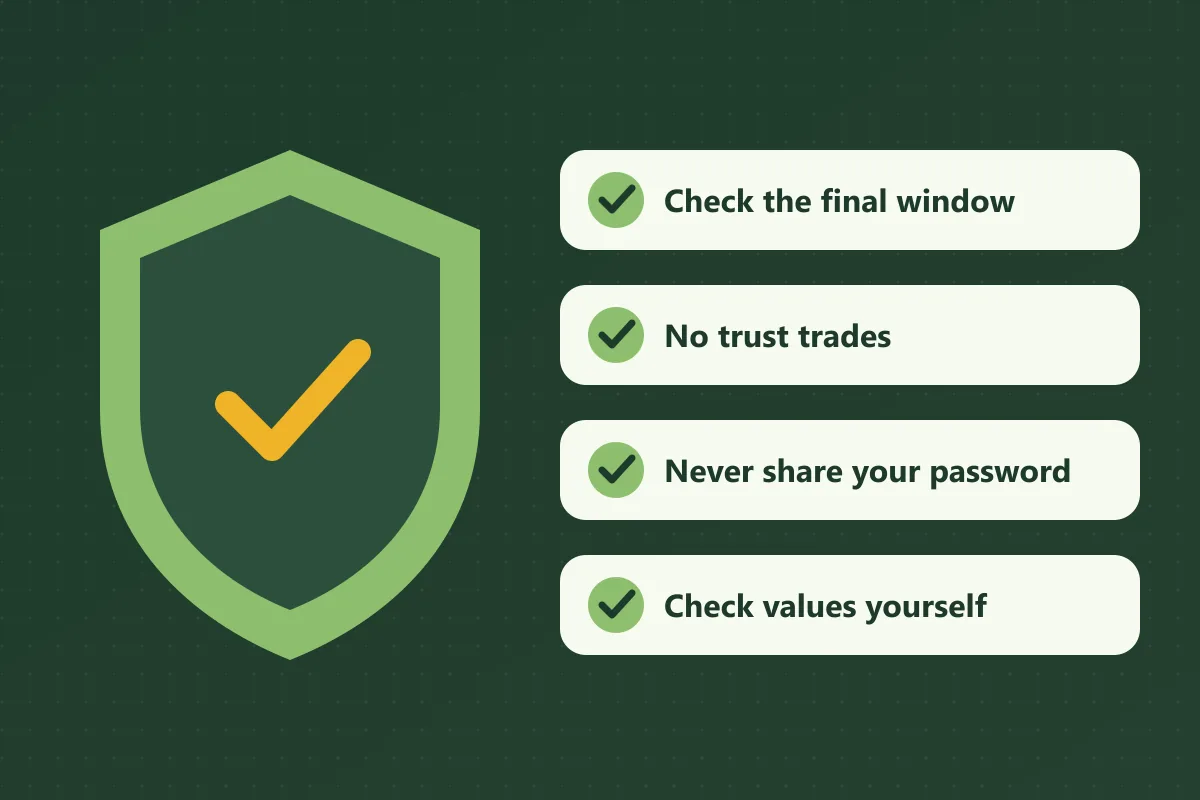
You avoid most scams by checking the final trade window carefully and never giving items first. Scammers depend on speed and pressure, so slow down before you accept any unexpected offer.
- Check every pet, weight and age in the final window, because items can be swapped at the last moment.
- Refuse trust trades, where you hand over a pet and expect the other player to pay later.
- Never share your password, and ignore links that promise free pets or Robux.
- Ignore screenshots of value lists, and check each pet in this calculator yourself.
- Treat offers far above the listed value with suspicion, because they frequently hide a deception.
Remember that every regular trade uses a Trading Ticket, even when the other player declines. Plan your offer before you send it, so a scammer cannot waste your tickets with repeated requests.
A fair verdict only covers value, so it cannot confirm that the other player is honest. If anything feels suspicious, cancel the trade and report the player through the Roblox menu.
Sources
- Grow a Garden on Roblox, the official game page
- Official Grow a Garden X account, for update notes such as the Sheckles fee removal
- Trade World page on the Grow a Garden Wiki, for Trade Token and booth rules
- Community trade value lists, used for every pet value and checked against each other.